Blog article
Common Female Factors in Infertility—and Why Both Partners Are Assessed
A couple-centred guide to common female fertility factors, the purpose and limits of testing, and how a structured evaluation brings the full picture together.
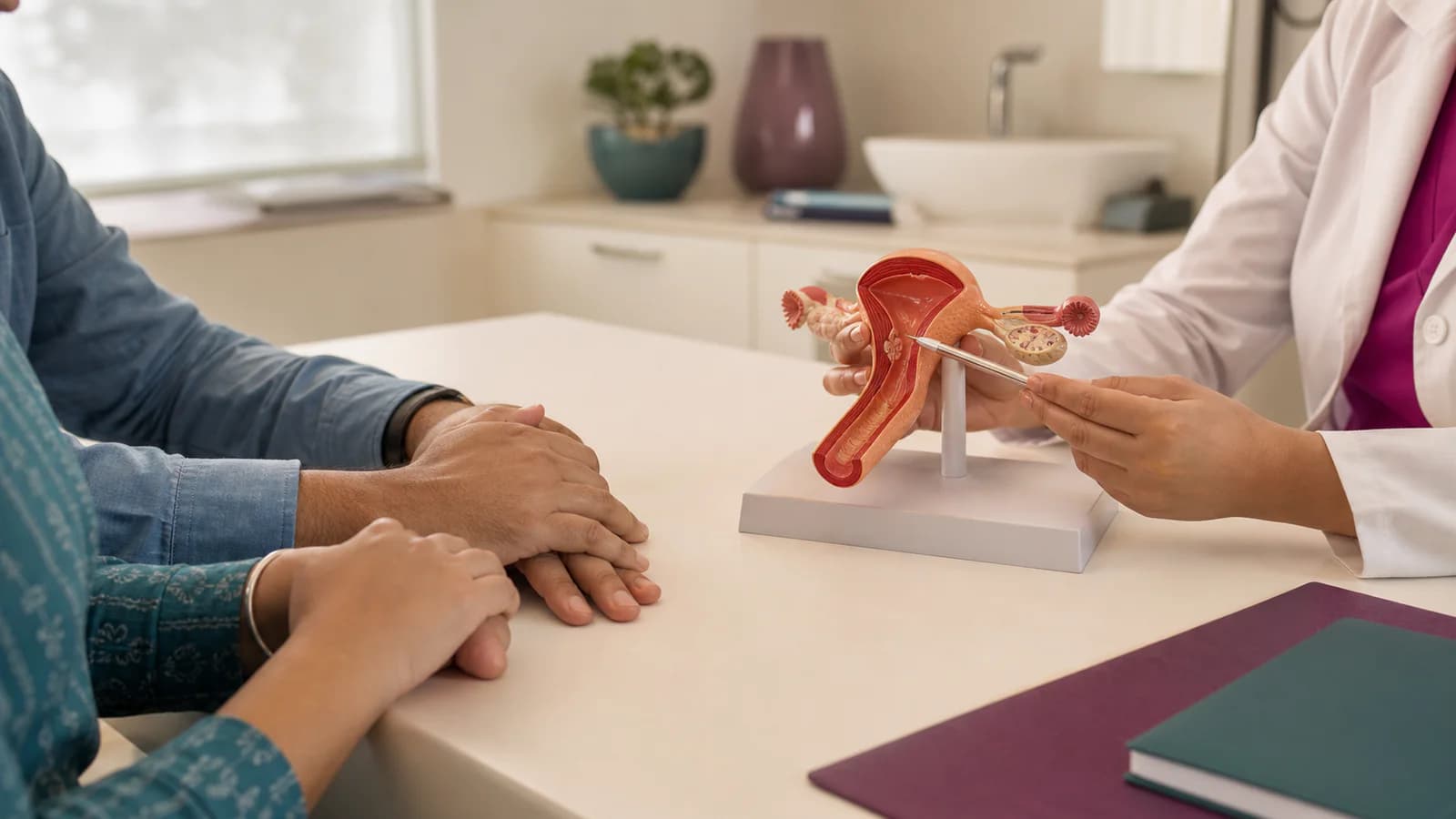
Infertility is a couple’s health concern
When pregnancy takes longer than expected, it is common for attention to fall first on the woman. That is neither medically complete nor emotionally fair. Fertility can be affected by factors involving ovulation, the fallopian tubes, the uterus, sperm, both partners, or factors that current tests cannot identify. A thoughtful assessment therefore considers the couple rather than assigning blame.
The purpose of evaluation is to understand which factors may be reducing the chance of conception and to identify options that fit the couple’s age, history and priorities. It is not a search for fault. Some findings can be treated directly, some provide context for planning, and some results may be reassuring without giving one simple explanation.
Ovulation disorders and irregular cycles
Ovulation is the release of an egg from the ovary. Infrequent or absent ovulation can make conception less likely because there are fewer opportunities for an egg and sperm to meet. Irregular, widely spaced or absent periods may suggest an ovulation problem, although a person can occasionally have bleeding without predictable ovulation. PCOS is one possible cause, but thyroid disorders, raised prolactin, major weight change, intensive exercise and other health conditions can also affect cycles.
Evaluation starts with menstrual and medical history. Depending on that history, a clinician may suggest hormone tests, ultrasound or evidence of ovulation at an appropriate time in the cycle. No single hormone result should be interpreted in isolation. The clinical pattern matters, and a test that is useful for one person may add little for another.
Fallopian-tube and pelvic factors
At least one open, functioning fallopian tube is usually needed for sperm and egg to meet during unassisted conception. Previous pelvic infection, pelvic or abdominal surgery, a past ectopic pregnancy, or inflammation related to endometriosis can increase the possibility of tubal damage. Many people with tubal disease have no obvious day-to-day symptoms, so history alone may not provide the answer.
Tubal patency is commonly assessed during a standard infertility evaluation, while the timing and method are individualized. The choice of test depends on history, local resources and whether another pelvic condition is suspected. A result suggesting blockage sometimes needs careful confirmation because temporary spasm or technical factors can affect interpretation.
Endometriosis and fertility
Endometriosis is a condition in which tissue similar to the lining of the uterus is found outside the uterus. It can be associated with painful periods, pelvic pain, pain during sex or bowel and bladder symptoms that follow the menstrual cycle. It may affect fertility through inflammation, pelvic anatomy, ovarian involvement or other mechanisms, but the relationship differs greatly between individuals.
Clinical history and ultrasound can identify some signs of endometriosis, particularly ovarian cysts called endometriomas or deeper disease. Normal imaging does not fully rule it out. Decisions about medical treatment, surgery or fertility treatment should consider pain, age, ovarian reserve, previous surgery and reproductive plans. Pregnancy should not be presented as a treatment for endometriosis.
Uterine factors, fibroids and the uterine cavity
The uterus is where an embryo implants and a pregnancy develops. Polyps, scar tissue, congenital differences in uterine shape, and some fibroids can affect the uterine cavity. The impact of a fibroid depends more on its location, size and whether it distorts the cavity than on the simple fact that it is present. Many fibroids do not interfere with fertility and do not require an operation.
Pelvic ultrasound is often the starting point for looking at the uterus and ovaries. If the history or scan suggests a cavity concern, further imaging or hysteroscopy may be discussed. These investigations should answer a specific clinical question. Routine procedures without an indication can add cost and anxiety without improving the plan.
Why the male partner is assessed in parallel
Semen factors contribute to a substantial proportion of fertility difficulties, alone or alongside female factors. A semen analysis is therefore commonly included early rather than left until after months of tests for the woman. If the first result is outside the laboratory reference range, the clinician may recommend repeat testing or a focused male evaluation because semen parameters can vary.
Parallel assessment saves time and supports balanced decisions. It also prevents a female finding that may be mild or incidental from being treated as the entire explanation. Fertility planning works better when ovulation, pelvic factors, sperm and timing are considered together.
Putting the results together
There is no single investigation that explains each fertility delay. A structured evaluation often includes history for both partners, cycle assessment, semen analysis and selected testing of the uterus, ovaries or tubes. The exact combination should be guided by age, how long the couple has been trying, symptoms, previous pregnancies and known risk factors.
After evaluation, options may include continued trying with guidance, treatment of an identified condition, ovulation support, IUI, IVF or another individualized pathway. Earlier consultation is appropriate when cycles are very irregular, there is known pelvic disease, either partner has a fertility risk factor, or age makes delay more significant.
Frequently Asked Questions
Does one abnormal test confirm the cause of infertility?
Can AMH tell me whether I will conceive naturally?
Do fibroids affect fertility?
Should the male partner be tested at the same time?
Sources and References
These authoritative sources support the educational statements in this article. They do not replace personalised assessment or medical advice.
- World Health Organization: Infertility fact sheetPublication year 2025Checked 29 July 2026
- American Society for Reproductive Medicine: Fertility evaluation of infertile women: a committee opinionPublication year 2021Checked 29 July 2026
- National Institute for Health and Care Excellence: Fertility problems: assessment and treatment (NG257)Publication year 2026Checked 29 July 2026
Fertility & IVF care
Review the clinic’s fertility evaluation and treatment service.
When to seek fertility evaluation
Understand how age, duration and history affect timing.
Endometriosis guide
Read about symptoms, diagnosis and fertility planning.
Related services
Related articles
When Should a Couple Seek Fertility Evaluation?
A clear, patient-first guide to timing fertility evaluation, common triggers for early review, and what to expect at the first appointment.
Unexplained Infertility: What It Means and What Happens Next
Normal initial results can be reassuring and frustrating at the same time. This guide explains the term “unexplained infertility” and how next steps are individualized.
Endometriosis: Symptoms, Diagnosis, Fertility and Treatment
Endometriosis can affect pain, daily life and fertility in different ways. Diagnosis and care should reflect symptoms, priorities and reproductive plans.