Blog article
Pregnancy Nutrition: Practical Guidance for a Healthy Pregnancy
Pregnancy nutrition is not about a perfect menu. It is a practical pattern of varied food, safe preparation and individualized support for changing needs.
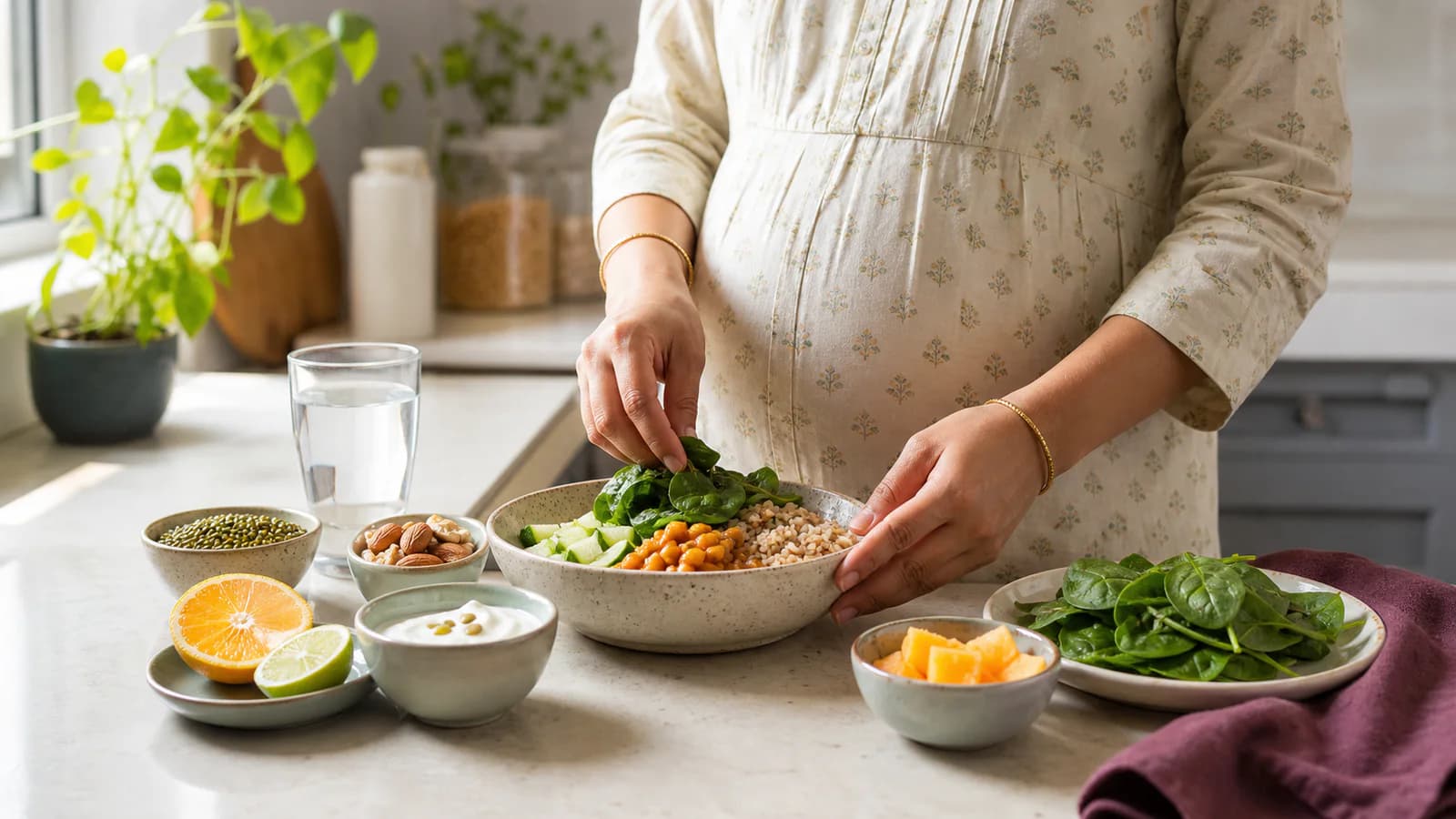
Build a pattern, not a perfect pregnancy diet
Nutrition during pregnancy supports the mother’s health, placental function and fetal growth. That does not require expensive foods or a rigid meal chart. A useful pattern includes vegetables and fruit, whole grains or other fibre-rich carbohydrates, protein foods, dairy or suitable alternatives, and fats from foods such as nuts, seeds and plant oils. Cultural preferences and household routines can fit within that structure.
Appetite, nausea, work schedules and food access vary, so the plan should be realistic. Looking at the pattern across several days is often more helpful than judging one meal. Restrictive rules can make eating harder and may reduce dietary variety. Medical conditions, laboratory results and weight trends may justify more specific guidance from the obstetric team or a qualified dietitian.
Protein, variety and regular meals
Protein contributes to tissue growth and can also make meals more satisfying. Sources include pulses, beans, lentils, eggs, dairy foods, soy, nuts, seeds, fish, poultry and meat. Combining different plant proteins across the day can meet needs in vegetarian diets. There is no requirement to centre each meal on a large portion of animal protein.
Regular meals or smaller planned meals can help when long gaps worsen nausea, acidity or fatigue. Pairing a carbohydrate with protein or healthy fat may improve fullness and steadier energy. Examples include roti with dal and vegetables, yoghurt with fruit and nuts, or rice with beans and salad. Individual glucose advice may change portioning when gestational diabetes is present.
Iron, folate, calcium and supplements
Folic acid is important before conception and in early pregnancy. A universal high-dose regimen should not be copied from online advice: the appropriate dose depends on national or local antenatal guidance and individual risk. Iron, calcium, vitamin D, vitamin B12, iodine and other supplement needs also depend on diet, test results, pregnancy history and the local protocol.
Higher or additional doses should not be copied from another person’s prescription. Anaemia, vitamin B12 deficiency, thyroid disease, malabsorption or a previous neural-tube defect can change the plan. Bring supplement labels to appointments and mention herbal or “natural” products because ingredients can overlap and safety evidence varies.
Food safety and safer preparation
Pregnancy changes susceptibility to some foodborne infections. Wash hands and produce, keep raw and cooked foods separate, avoid raw or undercooked animal products, cook meat and eggs thoroughly, refrigerate perishable food promptly, and choose pasteurised milk and dairy products. Safe storage and preparation matter at home and when eating outside.
Fish can provide protein and beneficial fats, while high-mercury fish should be avoided according to verified local guidance. A generic international species list may not match fish sold in India, so ask the care team which local choices apply. Fever, persistent vomiting, severe diarrhoea or concern after a known exposure deserves medical advice, especially if hydration is difficult.
Caffeine, alcohol and hydration
Alcohol should be avoided during pregnancy because a safe exposure level has not been established. Less than 200 mg of caffeine per day is a commonly recommended ceiling, while individual advice may be lower. Count caffeine from coffee, tea, cola, energy drinks, chocolate and some medicines rather than coffee alone.
Water needs depend on climate, activity, vomiting and medical conditions. Persistent vomiting, dehydration, significant weight loss, very low urine output or inability to retain fluids needs clinical review. Oral rehydration or medication may be advised after assessment instead of relying on sugary drinks.
Nausea, reduced intake and vegetarian diets
Nausea can make balanced eating temporarily difficult. Small frequent meals, bland foods, cool foods, separating fluids from large meals and identifying personal triggers may help. The immediate aim is tolerable intake and hydration, not dietary perfection. Persistent vomiting, weight loss, dehydration, abdominal pain or blood in vomit requires clinical assessment.
Vegetarian diets can support pregnancy when they are varied and planned. Attention may be needed for protein, iron, vitamin B12, calcium, iodine, vitamin D and omega-3 fats. Vegan diets merit individualized review because some nutrients are difficult to obtain reliably without fortified foods or supplements. A dietitian can adapt advice to familiar Indian foods and budget.
Nutrition when gestational diabetes is diagnosed
Gestational diabetes does not mean removing all carbohydrates. Carbohydrates remain a source of energy, but their type, portion and distribution can affect glucose readings. Pairing them with protein, vegetables and fibre, avoiding sugar-sweetened drinks, and planning meals around monitoring results may help. The plan should protect adequate nutrition and avoid shame or severe restriction.
If glucose remains above the agreed range despite nutrition and activity changes, medication may be clinically appropriate. That is not a personal failure. Pregnancy hormones influence insulin action. A diabetes-in-pregnancy team can connect food choices, glucose monitoring, fetal growth and delivery planning. Follow the local clinical protocol rather than a generic online meal plan.
When professional nutrition review helps
Ask for tailored support if there is gestational diabetes, anaemia, significant vomiting, food allergy, gastrointestinal disease, bariatric surgery, a vegan diet, multiple pregnancy, poor weight gain or uncertainty about supplements. Nutrition review can also help when anxiety about food is interfering with eating or when cultural advice from different sources feels contradictory.
Bring a short food record, supplement list and recent reports. The goal is a workable plan that meets medical needs while respecting preferences. Pregnancy nutrition guidance should support confidence and flexibility, not make food a daily test that someone can fail.
Frequently Asked Questions
Do I need to eat twice as much during pregnancy?
Can I follow a vegetarian diet during pregnancy?
Should I choose my own supplement doses?
Does gestational diabetes require a carbohydrate-free diet?
Sources and References
These authoritative sources support the educational statements in this article. They do not replace personalised assessment or medical advice.
- World Health Organization: WHO recommendations on antenatal care for a positive pregnancy experiencePublication year 2016Checked 29 July 2026
- American College of Obstetricians and Gynecologists: Healthy Eating During PregnancyLast updated March 2026Last reviewed December 2025Checked 29 July 2026
- U.S. Food and Drug Administration: Safe Eats: Food Safety for Moms-to-BeChecked 29 July 2026
Pregnancy care
Explore antenatal monitoring, birth planning and postnatal support.
Gestational diabetes
Understand screening, glucose monitoring and coordinated care.
Postpartum recovery
Plan for nutrition, feeding support and recovery after birth.
Related services
Related articles
Gestational Diabetes: Screening, Monitoring and Care
Gestational diabetes can affect pregnancies without obvious symptoms. Coordinated monitoring and individualized care support the mother and baby during pregnancy and beyond.
Delivery Planning: Vaginal Birth, Caesarean Birth and Shared Decisions
A birth plan is a shared clinical conversation, not a promise. Learn how vaginal and caesarean birth options are considered and why plans may change.
Postpartum Recovery: What to Expect and When to Seek Help
Recovery after birth is physical and emotional, and it deserves ongoing care. Learn what may be expected, what needs review and what needs urgent help.