Blog article
Uterine Fibroids: Symptoms, Fertility and Treatment Options
Fibroids are common benign uterine growths. Whether they need treatment depends on symptoms, location, size, reproductive plans and personal priorities.
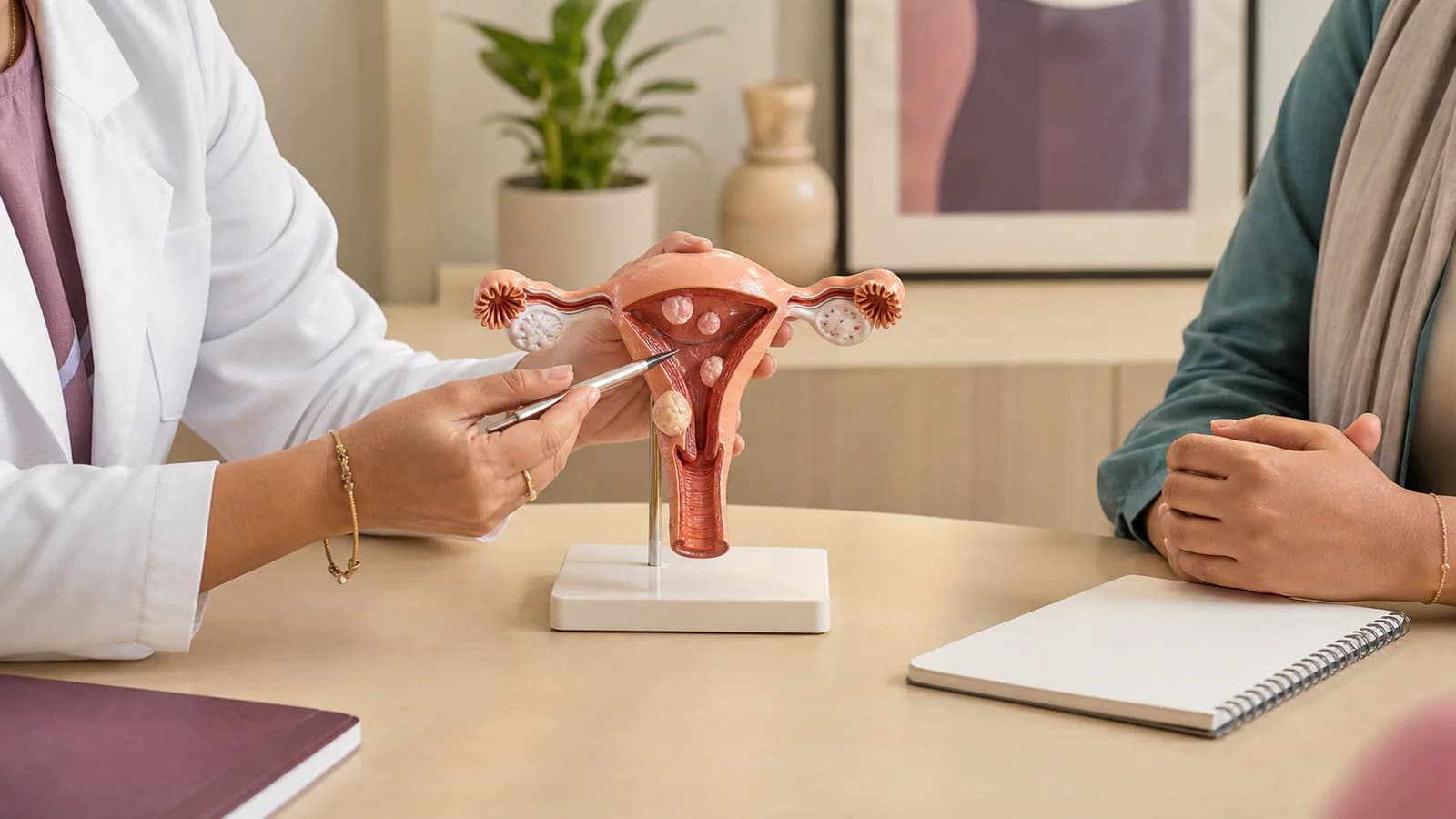
What fibroids are
Uterine fibroids are benign growths arising from the muscle of the uterus. They may occur as one growth or several and can sit within the uterine wall, project toward the outer surface or alter the uterine cavity. Many are discovered incidentally and cause no symptoms. Their presence does not by itself mean cancer, infertility or a need for surgery.
Location, size and number help explain potential effects, but symptoms and life goals are equally important. A small fibroid that changes the cavity may have different relevance from a larger one on the outside of the uterus. Treatment decisions should not rely on diameter alone.
Bleeding, pressure and pain symptoms
Fibroids can be associated with heavy or prolonged periods, bleeding between periods, menstrual cramps, pelvic pressure, urinary frequency, constipation, abdominal enlargement or pain during sex. These symptoms overlap with adenomyosis, endometriosis, polyps and other conditions, so assessment should not assume fibroids explain each complaint.
Track bleeding, cycle timing, pain and how symptoms affect daily life. Very heavy bleeding with weakness, faintness or breathlessness, acute severe pain, fever or pregnancy-related bleeding needs prompt assessment. A change in fibroid size can justify review, but rapid growth alone is not a diagnosis of cancer and should not be used for alarming comparisons with sarcoma.
Heavy bleeding and anaemia
Repeated heavy bleeding can lead to iron deficiency and anaemia. Fatigue, breathlessness, palpitations, dizziness or reduced exercise tolerance may be clues, although blood testing is needed for diagnosis. A full blood count is commonly part of assessment when heavy menstrual bleeding is reported.
Care may need to address bleeding and iron deficiency at the same time. Iron treatment does not identify the cause of bleeding, and controlling bleeding does not immediately restore iron stores. Severe symptoms or very low blood count may need urgent or specialist management.
How fibroids are evaluated
Assessment begins with menstrual, pregnancy and medical history and may include abdominal or pelvic examination. Ultrasound is commonly used to identify fibroid size, number and location and to assess the ovaries and uterus. The route of ultrasound depends on symptoms, suitability and consent.
If cavity distortion is suspected, hysteroscopy or specialized imaging may be considered. MRI is useful in selected complex cases or procedure planning but is not routinely required. Investigations should answer a clinical question and support a decision rather than simply produce a longer list of findings.
Fertility and pregnancy relevance
Most fibroids do not prevent pregnancy. Fertility relevance depends particularly on whether a fibroid distorts the uterine cavity, along with size, location and other fertility factors. Sperm, ovulation, tubes, age and endometriosis should still be considered before assigning the delay to a fibroid.
During pregnancy, many people with fibroids have uncomplicated outcomes, while some have pain, fetal-position issues or other complications. Preconception treatment is not required for each fibroid. Surgery can also affect the uterus and future birth planning, so potential benefits and risks deserve careful discussion.
Observation and medical management
Observation may be appropriate when fibroids cause little difficulty, the diagnosis is clear and there is no concerning change. Follow-up is based on symptoms, life stage and clinical findings rather than a fixed scan schedule for each person. Fibroids often change around menopause, but new bleeding still needs appropriate evaluation.
Medicines may reduce heavy bleeding or pain and may include non-hormonal or hormonal options depending on contraception needs and medical history. Some medicines temporarily reduce fibroid-related symptoms or size. They do not suit each person, and the effect may not continue after treatment stops.
Frequently Asked Questions
Do fibroids need surgery?
Do fibroids cause infertility?
Is ultrasound usually used for evaluation?
When is heavy bleeding urgent?
Sources and References
These authoritative sources support the educational statements in this article. They do not replace personalised assessment or medical advice.
- American College of Obstetricians and Gynecologists: Uterine FibroidsLast updated July 2022Last reviewed December 2025Checked 29 July 2026
- National Institute for Health and Care Excellence: Heavy menstrual bleeding: assessment and management (NG88)Published 14 March 2018Last updated 24 May 2021Checked 29 July 2026
Gynecology care
Review assessment and treatment of common gynecological concerns.
Endometriosis
Compare another possible cause of pelvic pain and heavy periods.
Fertility factors
See how uterine findings fit within a couple evaluation.
Related services
Related articles
Endometriosis: Symptoms, Diagnosis, Fertility and Treatment
Endometriosis can affect pain, daily life and fertility in different ways. Diagnosis and care should reflect symptoms, priorities and reproductive plans.
Women’s Preventive Health: Which Checkups Matter and When
Preventive care is more useful when it is based on age, symptoms, history and risk—not sold as one annual test package for each woman.
Common Female Factors in Infertility—and Why Both Partners Are Assessed
A couple-centred guide to common female fertility factors, the purpose and limits of testing, and how a structured evaluation brings the full picture together.